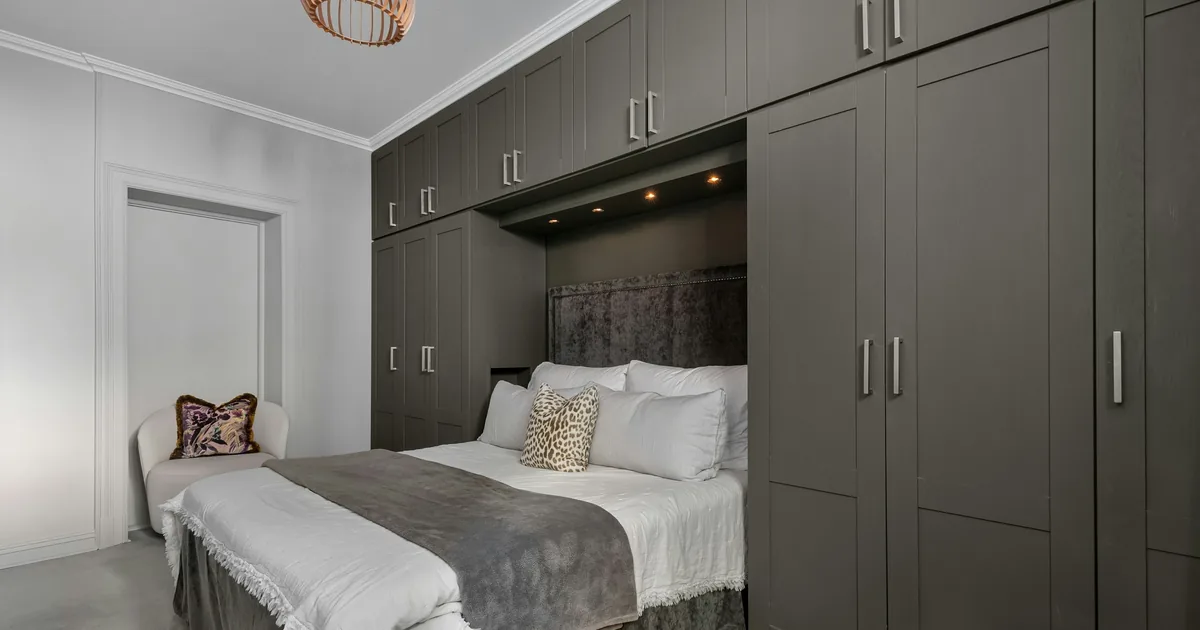
Fitted wardrobes are one of the most common carpentry jobs we’re asked about, and one of the hardest to price from a website. Two wardrobes that look the same in a photo can be a long way apart once you know what’s behind the doors. This guide sets out our published ranges, what moves a quote up or down, and how to get a figure you can compare.
Typical Fitted Wardrobe Costs in 2026
These are the guide ranges from our fitted wardrobes page, for a local carpenter to supply and fit in Barnet and the Hertfordshire border. Most jobs land somewhere between £800 and £3,500.
- Single alcove wardrobe — £900–£1,400
- Pair of matched alcove wardrobes either side of a chimney breast — £1,800–£2,800
- Full wall, sliding doors, factory-sprayed — £2,500–£3,500
- Walk-in dressing area — £2,500–£5,500+
- Built-in under-eaves storage in a loft conversion — £800–£2,500 per run
Treat these as starting points, not quotes. Whatever figure you’re given, check whether it includes VAT, painting and making good afterwards — those are the three things most often missing from a quote that looks cheap.
What Drives the Cost
Size and ceiling height
Wardrobes are priced on the linear metres of wall they cover and how tall they are. Floor-to-ceiling units in a Victorian or Edwardian house with high ceilings need more material and often a separate run of top cupboards above the main doors.
Alcoves or a full wall
Alcove wardrobes are usually the most economical route into fitted storage, because the chimney breast and the side walls do much of the work. The skill — and the time — goes into scribing the frame to walls that are rarely square. A full-wall run needs complete carcasses from end to end, more doors and more hardware, which is why it sits higher in the range.
Sliding or hinged doors
Neither is automatically cheaper. Hinged doors open the whole interior to view and suit the Shaker and in-frame styles that look right in period rooms. Sliding doors need no swing space, which matters when the bed sits close to the wardrobe, but they rely on a level, well-made track and you only ever see half the interior at once. Good sliding gear is not cheap.
Materials: painted MDF, veneer or solid wood
Painted MDF is the workhorse of fitted wardrobes: stable, smooth and ideal for a painted finish. Veneered MDF carcasses with solid hardwood facings are a common step up and last well. Birch plywood is the premium carcass choice. A real wood veneer finish costs more than paint, and solid timber doors and frames sit at the top of the range — they look superb but cost more and need allowing for seasonal movement.
Internals
A single hanging rail and a shelf is the baseline. Double hanging, soft-close drawer banks, pull-out shoe racks, trouser rails and lit shelving each add to the cost, and internals are where budgets most often drift.
Eaves and loft wardrobes
Wardrobes under a sloping ceiling are slower to build because every door and panel follows the angle of the roof. In a loft conversion the low space either side of the room is dead space unless it’s fitted out, and it’s far easier and cheaper to plan it alongside the conversion than to add it later. Our loft conversion cost guide covers eaves storage in more detail.
Painting and finish
Site painting is the lowest-cost finish: the wardrobe is built, filled and painted in the room, colour-matched to the walls, but every coat needs time to dry. Factory spraying gives the smoothest, hardest-wearing finish and can be matched to any standard paint colour, at extra cost and lead time. Some quotes are for primed timber only, leaving the painting to you — a common reason two prices look further apart than they really are.
Bespoke vs Flat-Pack vs Fitted Kits
Flat-pack is the cheapest option and perfectly fine in the right room. But it’s a set of rigid boxes standing on a floor that may slope, against a wall that may bow, usually with a gap to the ceiling.
Fitted kits sit in the middle. Standard-width modular carcasses are installed with filler strips and end panels so the run looks built-in. They work well on a straight, full-height wall in a newer house. They struggle with alcoves of odd widths, sloping ceilings and period rooms, where the fillers eat into the storage you’re paying for.
Bespoke wardrobes are made for the room: every carcass cut to size, scribed to the floor and walls, and taken flush to the ceiling. They cost the most per metre but use every centimetre, which is why bespoke is usually the right answer in chimney-breast alcoves and under eaves.
How Long Fitting Takes
- Measure-up. A site visit to measure, check the walls and floor, and agree the layout and finish.
- Design sign-off. You approve a drawing showing doors, internals and finish.
- Workshop. Carcasses are cut in the workshop — about a day for a pair of alcoves. Factory-sprayed doors add lead time.
- On site. Most pair-of-alcove jobs take 3–5 working days. Larger floor-to-ceiling wall wardrobes typically take 5–7 days. Site painting adds drying time on top.
The carpenter lifts the skirting in the fitting area and either reuses it or fits matching new skirting along the wardrobe base. The room is usually usable in the evenings between fitting days.
How to Get an Accurate Quote
- Photograph the wall, including sockets, radiators and switches, and note rough measurements.
- List what you’ll store — long and short hanging, shoes, folded clothes — because that decides the internals.
- Pick a door style and finish, and have a paint swatch or tin ready if you want the wardrobe colour-matched.
- Ask for an itemised quote covering carcass material, doors, finish, internals, painting, skirting and making good, waste removal and VAT.
- Compare like for like. A primed-only quote and a factory-sprayed quote are not the same job.
- Expect a site visit. No carpenter can price a fitted wardrobe accurately without measuring, because almost no wall in an older house is square.
If you’d rather not chase several firms, we introduce you to one trusted local specialist, chosen for the job — not five firms chasing you. If you’re weighing open shelving rather than hanging space, alcove units and shelving start from floating shelves at around £300–£600 per alcove.
Frequently Asked Questions
How much do fitted wardrobes cost in Barnet and Hertfordshire?
Most fitted wardrobe jobs cost between £800 and £3,500. As a guide, a single alcove wardrobe is £900–£1,400, a matched pair of alcove wardrobes £1,800–£2,800, a full wall with factory-sprayed sliding doors £2,500–£3,500, and a walk-in dressing area £2,500–£5,500 or more.
Are sliding wardrobe doors cheaper than hinged doors?
Not automatically. Sliding doors save swing space but depend on a good-quality track, and large mirrored or sprayed sliding panels can cost more than hinged doors. The door material and finish usually matter more to the price than how the doors open.
Is a bespoke wardrobe worth it over a fitted kit?
On a straight, full-height wall in a newer house, a fitted kit can work well. In chimney-breast alcoves, under eaves or in period rooms with uneven walls, bespoke is usually worth it, because it is built to the room and uses space that standard-width modules and filler strips waste.
How long does it take to fit wardrobes?
Most pair-of-alcove jobs take 3–5 working days on site, plus a measure-up visit and about a day in the workshop. Larger floor-to-ceiling wall wardrobes typically take 5–7 days. Site painting and factory-sprayed doors add time.
Can fitted wardrobes go in a loft conversion?
Yes, and it is one of the best uses of the low space either side of a loft room. Built-in under-eaves storage typically costs £800–£2,500 per run, and it is easier and cheaper to plan it alongside the conversion than to add it afterwards.