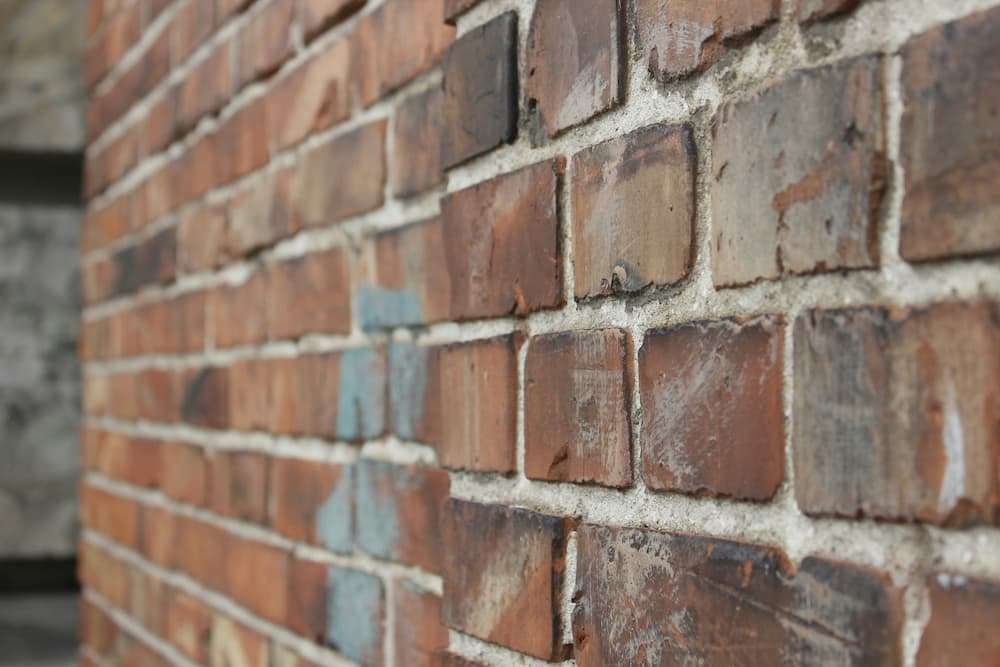
A chimney stack takes more weather than any other brickwork on the house — exposed on all four sides, above the roofline, with nothing sheltering it. That's why chimneys are usually the first thing to need repointing on a period property, often years before the walls below show any wear.
Why Chimneys Go First
Every other piece of brickwork on a typical house has some shelter — an eaves overhang, a neighbouring wall, ground-level splashback that's the worst of it. A chimney stack has none of that. Rain hits it from every direction, wind-driven rain gets under loose mortar, and the stack cools faster than the rest of the house overnight, so frost damage concentrates there first. On a Victorian or Edwardian house with lime-mortar chimneys, repointing the stack every 25-40 years is normal maintenance, not a sign anything's gone badly wrong.
Repointing, Flaunching, or Rebuild
Repointing. Raking out degraded mortar joints between the bricks and repacking with fresh, correctly-specified mortar. The standard fix when the bricks themselves are sound and only the joints have failed.
Flaunching repair. The flaunching is the sloped mortar collar at the top of the stack, around the base of the pots, that sheds rainwater off the top of the chimney. It takes the most direct weather of anything on the stack and is often cracked or crumbling well before the vertical pointing needs attention — worth checking as a separate item on any chimney survey, since a good pointing job with failed flaunching still lets water in.
Stack rebuild. Needed when the bricks themselves have failed — spalling (the face cracking or shearing off from frost damage), a visible lean, or a structural crack running through several courses. No amount of repointing fixes a brick that's already failed; the affected courses need rebuilding.
Lime Mortar vs Cement
Chimneys on houses built before roughly 1920 were originally built with lime mortar — softer and more porous than cement, it lets moisture evaporate out of the brick rather than trapping it, and flexes slightly with seasonal expansion instead of cracking. Repointing a period chimney with modern cement mortar is one of the most common causes of accelerated brick damage on Victorian and Edwardian houses in Barnet and Hertfordshire — the cement is harder than the brick itself, so moisture that can't escape through the joint pushes out through the brick face instead, and frost does the rest. Post-1960s chimneys were built with cement and should stay cement-repointed.
Cost Guide
- Flaunching repair only: £250–£600
- Full stack repointing (single chimney, standard access): £600–£1,400
- Repointing with scaffold access for a taller/harder-to-reach stack: £1,000–£2,200
- Partial stack rebuild (a few courses): £1,500–£4,500
- Full stack rebuild: £4,000–£9,000
Access is the biggest cost variable — a single-storey rear-of-house chimney is far cheaper to scaffold than a stack on a three-storey Victorian terrace with restricted street access for the scaffold tower.
Frequently Asked Questions
Why does the chimney need repointing before the rest of the house?
A chimney stack is exposed to weather on all four sides above the roofline, with no other brickwork or eaves overhang to shelter it. Mortar joints on a chimney degrade years before the sheltered brickwork lower down the same house — it's usually the first repointing job a period house needs.
What is flaunching and does mine need it?
Flaunching is the sloped mortar collar at the top of the stack that holds the pots in place and sheds rainwater away from the brickwork. It's usually the first part of a chimney to crack, since it takes the most direct weather. Cracked or crumbling flaunching lets water into the stack even if the pointing lower down looks fine — worth checking separately on any chimney survey.
Lime mortar or cement for a chimney?
Chimneys on houses built before around 1920 were originally built with lime mortar, which is more porous and flexible than cement — it lets the brick breathe and moves with seasonal expansion instead of cracking. Repointing a period chimney with cement traps moisture in the brick and accelerates frost damage. Post-war chimneys are usually cement-built and stay cement.
How do I know if my chimney needs repointing or a full rebuild?
Repointing is enough if the bricks themselves are sound and only the mortar has failed. A rebuild is needed if the stack is visibly leaning, bricks are spalling (the face has cracked or sheared off), or there's a structural crack running through several courses. A specialist can usually tell from ground level with binoculars, though a roof-level inspection confirms it.
Do I need planning permission for chimney repointing?
No — like-for-like repointing and flaunching repair is maintenance, not development, and doesn't need planning permission even in a conservation area. Planning only comes into play for changes to the chimney's height, position or removal.