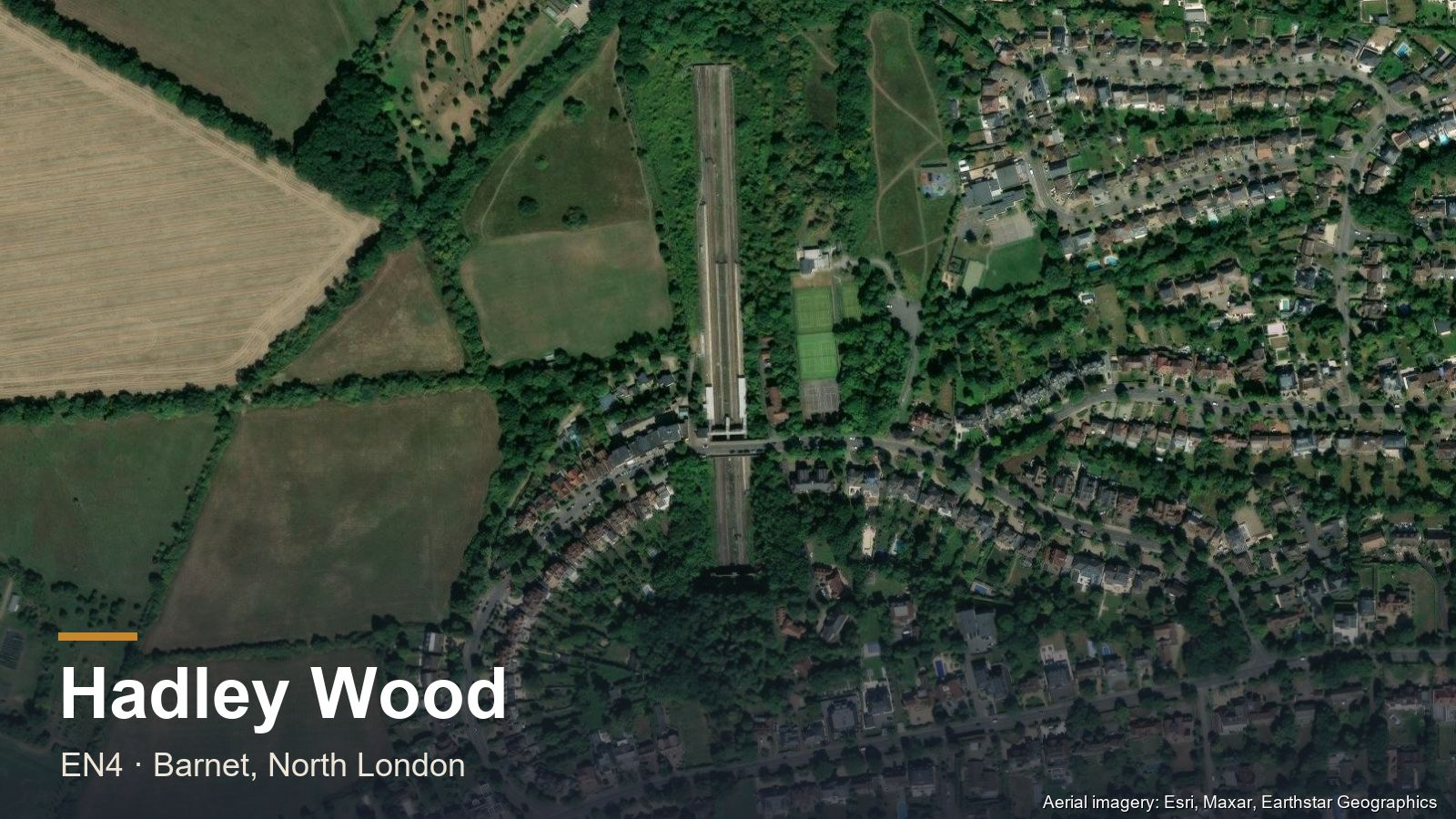
Hadley Wood EN4 is a leafy, low-density area on the northern flank of Barnet borough — substantial detached and semi-detached homes from the 1930s onwards, set around Hadley Wood golf course and the Hadley Wood railway station.
Hadley Wood housing stock. Large 1930s and post-war detached homes, with generous plots and mature gardens. The Crescent West and Beech Hill estates are particularly characteristic.
Carpentry & bespoke joinery. Premium-spec bespoke kitchens and fitted wardrobes — factory-sprayed finishes, in-frame cabinetry, walk-in dressing rooms in the larger master suites.
Lofts & extensions. Large detached properties support full mansard conversions and substantial two-storey rear extensions. Plot generosity means PD allowances are rarely the binding constraint — design intent drives the planning conversation.
What Projects Cost in Hadley Wood
Hadley Wood sits alongside Totteridge at the premium end — typically 10–15% above our standard figures. Plot generosity means permitted development allowances are rarely the binding constraint; design intent is.
- Mansard conversion — £50,000–£75,000+ on the larger detached stock.
- Two-storey rear extension — £75,000–£130,000; single-storey £45,000–£75,000.
- Fitted wardrobes and dressing rooms — factory-sprayed, in-frame finishes are the norm here rather than an upgrade.
- Bespoke kitchen — £22,000–£40,000 for handmade cabinetry.
Barnet Council Planning
Hadley Wood is in London Borough of Barnet. The Hadley Wood Conservation Area covers the historic core. Outside the conservation area, generous PD allowances apply but most substantial schemes still go through planning to ensure design quality.
The Hadley Wood Conservation Area covers the historic core, where permitted development rights are restricted: no side extensions, no roof extensions facing a highway, and cladding needs consent. Outside it, the generous plots mean permitted development allowances are seldom what stops a scheme.
Even so, most substantial projects here go through a planning application rather than relying on permitted development — partly for design quality, partly because a Lawful Development Certificate on a house of this value is worth having in writing when you come to sell. See the conservation areas guide for how designation is assessed.
Before You Commit
Three separate approvals govern most building work and they are routinely confused. Our guide to planning permission in Barnet covers which council decides and what falls under permitted development. Building regulations are a different approval entirely — needed for almost all structural work even when no planning permission is required — and if the job touches a shared wall or involves excavation near a boundary, you will also need a party wall agreement.
Frequently Asked Questions
Is Hadley Wood in a conservation area?
The Hadley Wood Conservation Area covers the historic core, though not the whole of Hadley Wood. Inside it, permitted development rights are restricted: side extensions and roof extensions facing a highway need a full application, and cladding needs consent. Designation is checked by address on the survey.
How much does an extension cost in Hadley Wood?
Around 10–15% above our standard figures. A single-storey rear extension runs £45,000–£75,000 and a two-storey £75,000–£130,000. The uplift is specification-driven rather than a difference in labour rates.
Do large plots in Hadley Wood make planning easier?
They remove one constraint but not the others. Plot generosity means permitted development allowances are rarely what stops a scheme, so design intent drives the conversation instead. Most substantial projects still go through a full application, and conservation area status changes the position entirely where it applies.